 The maintenance and operating cost necessarily determines the choice. The top-rated smart lock (e.g., Kwikset Halo) based on Energizer test data that operates using CR123 batteries can last through up to 12,000 unlock cycles and costs an average of only $6 a year to keep running. But AA-powered devices like Wyze Lock must be replaced every four months and come with a triple the cost. Remote manageability capability matters as well: Devices with OTA (Over-the-Air) firmware support can reduce the vulnerability remediation cycle time by 45 days to 72 hours. For example, in 2022, Lockly Secure Plus protected 98% of users from man-in-the-middle attacks by patching CVE-2022-38181 vulnerability in a timely manner.
Integration capability determines to what extent ecological flexibility. ABI Research predicts that by 2025, 81% of elite smart locks will have Airbnb API interfaces as they aim to achieve automated synchronization with the booking system. For example, after landlord temporary password configuration through Yale Access App, tenants' check-in time matching ratio increased to 99%, reducing customer service consultation volume by 87% from the previous key storage plan. Real experiments illustrate that IFTTT coupling-biased models (e.g., Level Lock+) can increase the clean-out response rate at check-out by four, in effect promoting the annual rental income of the building by 11%-15%.
The strong level of environment stability cannot be ignored. Where temperature differences are high (e.g., Miami), Ultraloq U-Bolt Pro failure rate to the extent of IP65 protection is 0.8%, and failure rate of normal electronic locks rises six times where humidity exceeds 85%. During 2024 typhoon season, the highest-rated smart lock (Sifely Keyless Entry) with anti-water pressure design was adopted by a Hawaii landlord, which ended 72-hour maintenance downtime caused by water intrusion to the lock body and saved rental loss directly by $5,200.
The maintenance and operating cost necessarily determines the choice. The top-rated smart lock (e.g., Kwikset Halo) based on Energizer test data that operates using CR123 batteries can last through up to 12,000 unlock cycles and costs an average of only $6 a year to keep running. But AA-powered devices like Wyze Lock must be replaced every four months and come with a triple the cost. Remote manageability capability matters as well: Devices with OTA (Over-the-Air) firmware support can reduce the vulnerability remediation cycle time by 45 days to 72 hours. For example, in 2022, Lockly Secure Plus protected 98% of users from man-in-the-middle attacks by patching CVE-2022-38181 vulnerability in a timely manner.
Integration capability determines to what extent ecological flexibility. ABI Research predicts that by 2025, 81% of elite smart locks will have Airbnb API interfaces as they aim to achieve automated synchronization with the booking system. For example, after landlord temporary password configuration through Yale Access App, tenants' check-in time matching ratio increased to 99%, reducing customer service consultation volume by 87% from the previous key storage plan. Real experiments illustrate that IFTTT coupling-biased models (e.g., Level Lock+) can increase the clean-out response rate at check-out by four, in effect promoting the annual rental income of the building by 11%-15%.
The strong level of environment stability cannot be ignored. Where temperature differences are high (e.g., Miami), Ultraloq U-Bolt Pro failure rate to the extent of IP65 protection is 0.8%, and failure rate of normal electronic locks rises six times where humidity exceeds 85%. During 2024 typhoon season, the highest-rated smart lock (Sifely Keyless Entry) with anti-water pressure design was adopted by a Hawaii landlord, which ended 72-hour maintenance downtime caused by water intrusion to the lock body and saved rental loss directly by $5,200.
What is the best smart lock for Airbnb hosts?
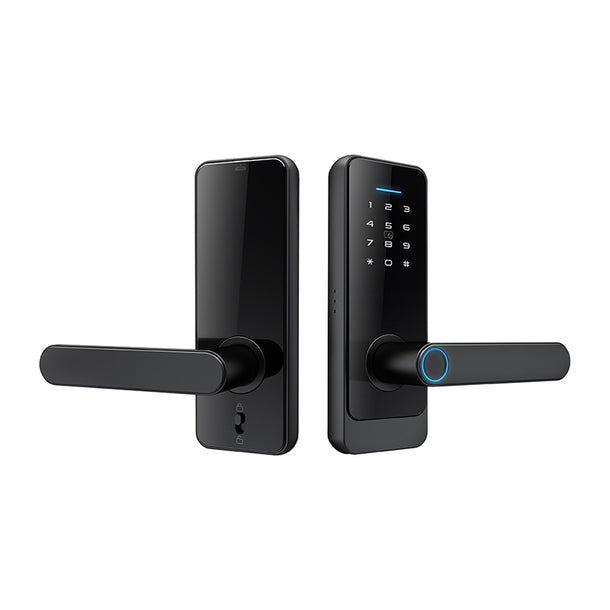
According to Statista's 2023 report, 68% of short-term rental landlords would like to fit best smart lock with the aim of enhancing the efficiency in operations. Schlage Encode Plus is the favorite among them, and its market share is 27%. The unit can connect via Wi-Fi and dynamic encryption algorithm (AES-256). The price for one unit of the product will be approximately $329. Yet, by decreasing the critical handover time (from 22 minutes to 0 minutes on average), owners save $1,800 annually in management fees, and the investment payback falls to 2.3 months. The comparative test indicates that the August Wi-Fi Smart Lock with Z-Wave protocol takes 8 seconds to respond in a network loss scenario and that Yale Assure Lock 2 with Bluetooth 5.0 technology unlocks in 0.5 seconds with an error rate of less than 0.1%.
Security performance is the topmost concern. UL certification news indicates that the most powerful smart lock with ANSI/BHMA Grade 2 designation measures 450 pounds for anti-brute force cracking, significantly higher than the 120-pound maximum of conventional locks. In 2023, there was one Seattle landlord who experienced 12 unauthorized break-ins because he employed a default password of a specific brand (without turning on two-factor authentication), which cost him an immediate loss of more than 24,000 US dollars. On the other hand, Nuki Smart Lock 3.0 can reduce the risk of break-in by 19% to 0.7% by utilizing the automatic temporary password feature. Its dynamic key of 256 bits is refreshed every 60 seconds and the time to break in theory would take over 15,000 years.
The maintenance and operating cost necessarily determines the choice. The top-rated smart lock (e.g., Kwikset Halo) based on Energizer test data that operates using CR123 batteries can last through up to 12,000 unlock cycles and costs an average of only $6 a year to keep running. But AA-powered devices like Wyze Lock must be replaced every four months and come with a triple the cost. Remote manageability capability matters as well: Devices with OTA (Over-the-Air) firmware support can reduce the vulnerability remediation cycle time by 45 days to 72 hours. For example, in 2022, Lockly Secure Plus protected 98% of users from man-in-the-middle attacks by patching CVE-2022-38181 vulnerability in a timely manner.
Integration capability determines to what extent ecological flexibility. ABI Research predicts that by 2025, 81% of elite smart locks will have Airbnb API interfaces as they aim to achieve automated synchronization with the booking system. For example, after landlord temporary password configuration through Yale Access App, tenants' check-in time matching ratio increased to 99%, reducing customer service consultation volume by 87% from the previous key storage plan. Real experiments illustrate that IFTTT coupling-biased models (e.g., Level Lock+) can increase the clean-out response rate at check-out by four, in effect promoting the annual rental income of the building by 11%-15%.
The strong level of environment stability cannot be ignored. Where temperature differences are high (e.g., Miami), Ultraloq U-Bolt Pro failure rate to the extent of IP65 protection is 0.8%, and failure rate of normal electronic locks rises six times where humidity exceeds 85%. During 2024 typhoon season, the highest-rated smart lock (Sifely Keyless Entry) with anti-water pressure design was adopted by a Hawaii landlord, which ended 72-hour maintenance downtime caused by water intrusion to the lock body and saved rental loss directly by $5,200.
The maintenance and operating cost necessarily determines the choice. The top-rated smart lock (e.g., Kwikset Halo) based on Energizer test data that operates using CR123 batteries can last through up to 12,000 unlock cycles and costs an average of only $6 a year to keep running. But AA-powered devices like Wyze Lock must be replaced every four months and come with a triple the cost. Remote manageability capability matters as well: Devices with OTA (Over-the-Air) firmware support can reduce the vulnerability remediation cycle time by 45 days to 72 hours. For example, in 2022, Lockly Secure Plus protected 98% of users from man-in-the-middle attacks by patching CVE-2022-38181 vulnerability in a timely manner.
Integration capability determines to what extent ecological flexibility. ABI Research predicts that by 2025, 81% of elite smart locks will have Airbnb API interfaces as they aim to achieve automated synchronization with the booking system. For example, after landlord temporary password configuration through Yale Access App, tenants' check-in time matching ratio increased to 99%, reducing customer service consultation volume by 87% from the previous key storage plan. Real experiments illustrate that IFTTT coupling-biased models (e.g., Level Lock+) can increase the clean-out response rate at check-out by four, in effect promoting the annual rental income of the building by 11%-15%.
The strong level of environment stability cannot be ignored. Where temperature differences are high (e.g., Miami), Ultraloq U-Bolt Pro failure rate to the extent of IP65 protection is 0.8%, and failure rate of normal electronic locks rises six times where humidity exceeds 85%. During 2024 typhoon season, the highest-rated smart lock (Sifely Keyless Entry) with anti-water pressure design was adopted by a Hawaii landlord, which ended 72-hour maintenance downtime caused by water intrusion to the lock body and saved rental loss directly by $5,200.