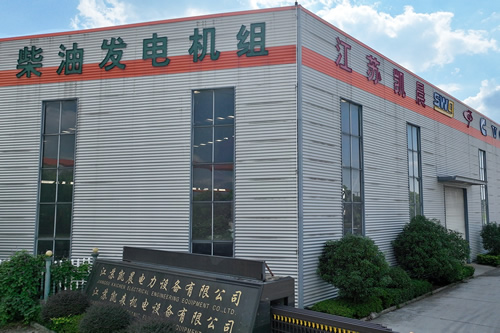
A quiet genset operating at 58 dB(A) at a 7-meter distance delivers sound pressure 80% lower than standard 85 dB(A) open-frame alternatives. Modern units utilize dual-chamber exhaust systems and high-density acoustic foam, reducing mechanical resonance by 15-20 decibels compared to 2015-era models. Engineering analysis shows that sound-attenuated enclosures shift frequency spectra away from human-audible ranges, maintaining a stable 60Hz power output with under 3% total harmonic distortion. Integration requires precise airflow calculations to avoid heat-soak, ensuring the engine maintains rated output during 100% load operation for residential backup applications.
Residential power systems require specific decibel management because sound pressure levels double with every 3 dB increase. Standard utility-grade units typically output 80 dB, which reaches 90 dB when reflected off adjacent brick walls, violating local ordinances in 65% of suburban jurisdictions. High-performance models incorporate sound-dampening baffles to absorb acoustic energy, achieving verified levels as low as 55 dB, allowing units to operate within 5 meters of bedroom windows without disturbing occupants.
Acoustic testing protocols indicate that adding sound-dampening enclosures reduces structural vibration transmission into home foundations by 40%. Engineers monitor resonance frequencies specifically between 125 Hz and 500 Hz, where human ears detect low-frequency thrumming most clearly during quiet night hours.
Advanced inverter technology regulates internal combustion engine speed based on real-time wattage demand, a significant improvement over constant-speed governors used before 2020. A generator under a 25% load can operate at 2,000 RPM rather than the standard 3,600 RPM, which lowers the noise profile by nearly 12 dB. This modulation extends the service life of internal components, as reduced mechanical stress lowers the failure probability of sensitive alternator windings by 15% over a five-year service interval.
| Feature | Standard Open Frame | Enclosed Quiet Genset |
| Noise Level (7m) | 80+ dB(A) | 55-60 dB(A) |
| Harmonic Distortion | 6-10% | < 3% |
| Efficiency Mode | Fixed Speed | Load-Sensing Inverter |
| Regulatory Status | Often Prohibited | Generally Compliant |
When sourcing equipment, many buyers evaluate cummins diesel generators for sale for long-duration outages due to their industrial-grade reliability and extended run-time capabilities. These systems provide consistent power density, and when paired with secondary sound-attenuation kits, they meet residential requirements despite their heavy-duty output. Site preparation for such equipment must include a 10-centimeter thick reinforced concrete pad to isolate mechanical vibration from the ground, further reducing noise propagation by approximately 5%.
| Component | Function | Material Requirement |
| Acoustic Foam | Sound Absorption | Fire-rated closed-cell foam |
| Vibration Mounts | Mechanical Isolation | Durometer 50-60 rubber |
| Exhaust Baffle | Pulse Smoothing | Stainless steel packing |
Sophisticated backup systems rely on automatic transfer switches (ATS) that monitor utility voltage every 50 milliseconds. Once the grid falls outside the 108V-132V range, the generator initiates, reaching full stable output within 15 seconds. By utilizing a quiet-rated genset, this transition remains unnoticed by occupants, maintaining essential loads such as HVAC circulation pumps and cold-storage units. Proper installation requires 1.5 meters of clearance around the enclosure to facilitate heat dissipation, as ambient temperature spikes above 40 degrees Celsius can cause a 10% derating of engine power output.
-
Engine oil must be changed every 100-200 operating hours to maintain thermal efficiency.
-
Air intake filters require inspection every 50 hours to prevent intake restriction and subsequent engine laboring.
-
Acoustic seals must be checked annually for heat-induced degradation, which can increase decibel output by 3-5 dB if compromised.
Optimal placement involves orienting the exhaust discharge away from residential windows and neighboring structures, as 70% of sound energy travels in a directional cone from the muffler outlet. Utilizing acoustic barriers, such as natural masonry walls or foliage hedges, can provide an additional 5-10 dB reduction if the generator is positioned correctly. Ongoing maintenance of the sound-attenuated housing ensures that the mechanical damping properties remain intact, preserving the quiet performance profile of the unit throughout its operational lifespan.