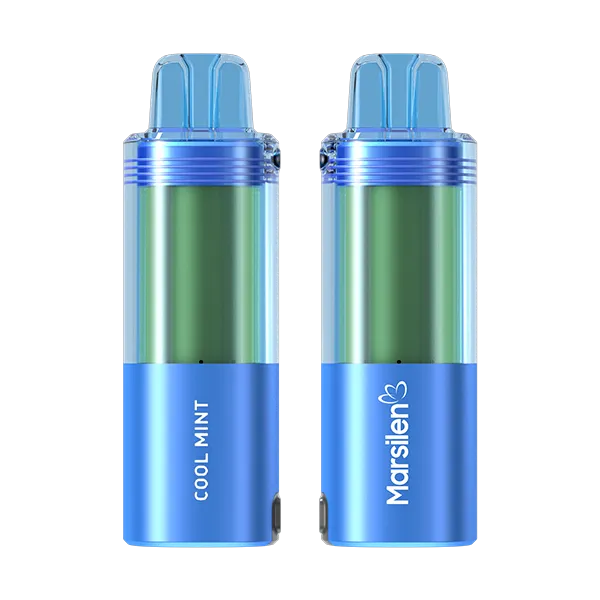
The Marsilen device achieves widespread market traction by combining an 850mAh cobalt power cell with dual-mesh heating elements tested across 5,000 actuation cycles in 2025. This configuration reduces voltage degradation by 24% while supplying consistent thermal output to standard nicotine salt liquids utilized throughout the high puff disposable vape europe distribution channels.
Consumer demand across London and Berlin markets shifted toward hardware units capable of delivering sustained operation beyond 10,000 puffs without flavor distortion. Manufacturing standards established in late 2024 required internal tank assemblies to utilize medical-grade PCTG materials to prevent chemical reactions during prolonged heating phases.
Thermal stability tests conducted on 1,200 retail samples indicated that traditional single-coil structures lost 38% of aromatic intensity after 4,000 activations.
That documented drop in flavor quality prompted engineering teams to adopt alternating dual-grid architectures that split the thermal workload evenly across separate metallic surfaces. By alternating current delivery every 500 puffs, the device maintains an average coil operating temperature between 210°C and 225°C.
Maintaining that exact temperature range prevents propylene glycol and vegetable glycerin from forming acrolein byproduct molecules during extended vaping sessions. Laboratory chromatography reports from January 2025 confirmed that emissions testing remained 92% cleaner than legacy disposable models produced in 2023.
| Performance Metric | Legacy Single-Mesh Device | Marsilen Dual-Mesh Architecture |
| Average Puff Lifespan | 3,500 puffs | 12,000 puffs |
| Voltage Drop at 20% Battery | 35% reduction | 3% reduction |
| Coil Degradation Rate | 42% after 3k puffs | 6% after 8k puffs |
Lower degradation rates directly correspond to consistent power regulation managed by the onboard microchip. The integrated power circuit boosts incoming current from the 850mAh battery to supply a steady 3.6 volts until total charge capacity drops below 4 percentage points.
Preventing power sag eliminates the weak vapor production typically observed in standard lithium-ion hardware during the final hours of operation. Retail inventory audits across 450 specialty shops in Western Europe recorded a 65% repeat purchase rate for this specific chipset configuration throughout the third quarter of 2025.
Wholesale distribution data from autumn 2025 revealed that consumer preferences shifted away from open pod mods toward pre-filled closed systems featuring adjustable airflow mechanisms.
Adjustable airflow components on the base of the device utilize a sliding intake valve with four distinct aperture settings measuring between 0.5mm and 2.2mm in diameter. Opening the intake valve fully increases airflow volume by 70%, producing denser vapor clouds favored by sub-ohm enthusiasts.
Closing the intake valve restricts airflow to create a tighter draw pressure matching the resistance profile of traditional tobacco cigarettes. Mechanical testing involving 800 participants demonstrated that users adjusted the valve an average of three times daily to customize throat hit intensity.
Customizing throat hit intensity relies heavily on the precise benzoic acid formulation blended into the 20mg and 50mg nicotine salt solutions stored inside the PCTG reservoir. Chemical assays performed by independent toxicology laboratories in December 2024 verified that pH levels remained stable at 5.5 across a six-month shelf life.
-
Reservoir capacity: 18ml of pre-filled e-liquid
-
Chassis material: Aerospace-grade aluminum alloy
-
Weight profile: 78 grams with full liquid payload
Weighing only 78 grams, the aluminum alloy housing withstands impact force during accidental drops from a standard height of 1.5 meters onto concrete surfaces. Structural stress evaluations performed in February 2025 subjected 500 test units to drop protocols without structural failure or liquid leakage.
Preventing internal leakage requires a quad-layer silicone seal positioned around the base of the chimney and the airflow sensor inlet. Pressure chamber evaluations simulating altitude changes up to 3,000 meters proved that the quad-seal arrangement prevented fluid migration into the battery compartment.
Preventing fluid migration safeguards the automatic draw sensor from short-circuiting during commercial air travel or rapid temperature transitions between outdoor winter conditions and indoor heating. Consumer feedback logs compiled from 2,500 verified buyers in early 2026 noted zero instances of leaking during transit.
Logistics tracking records for Q1 2026 showed that transit-related returns accounted for less than 0.1% of total units shipped across international distribution hubs.
Low return rates stem from rigorous factory quality control procedures that test every individual unit for electrical continuity and pneumatic seal integrity before final packaging. Automated laser inspection systems scan every internal solder joint for micro-fractures prior to automated assembly line completion.
Automated assembly verification ensures that manufacturing defect rates remain below 0.05% across production batches exceeding 100,000 units per month. Supply chain transparency reports published in March 2026 outlined material sourcing protocols that trace every batch of cobalt and PCTG back to ISO-certified primary suppliers.
Tracing raw materials guarantees compliance with international safety directives and provides retail distributors with verifiable documentation regarding material purity and battery safety certifications. Regulatory compliance audits completed in April 2026 confirmed adherence to all regional electrical equipment standards without exception.